If you are new to reef keeping, you may be wondering – what should I feed my corals?

In the sea, phytoplankton is right at the start of the food chain. Nannochloropsis as phytoplankton are a direct food source for corals but also indirectly through zooplankton, larvae and small invertebrates. Using phytoplankton in a reef fish tank has many positive effects.
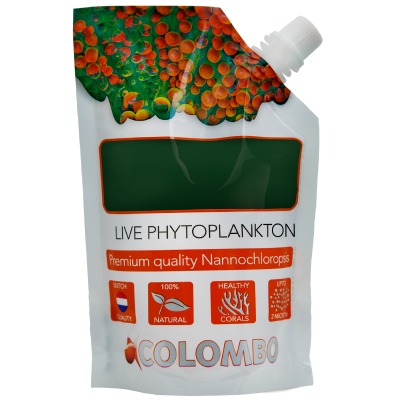
Live phytoplankton absorbs nitrate and phosphate, therefore reducing waste levels. This in turn helps to prevent nuisance algae growth in your reef aquarium.
Dosage: Start by adding 1ml per 50 litres of aquarium water daily for 2 weeks. Then, increase the dosage to 1ml per 25 litres daily.
- 100% natural
- For healthy corals
- Up to 2 microns in size
What else should I feed to my corals?
As well as feeding live phytoplankton, it is a good idea to add copepods to your marine aquarium. Marine copepods are an excellent source of food for your fish and corals too. Not only that, they can also breed in a marine aquarium. This means that they form a source of food over time.
How can I get copepods to breed in my tank?
When you get a fresh ‘copepod seeding box’ by post, the ‘pods’ will be fresh enough that you can add the water in the bag as well as the live copepods to your marine aquarium.
For your best chances of many pods surviving and getting into the rockwork to breed, we recommend adding them after the aquarium lights go out.
Simply float the copepod bags in the aquarium water for around 10 minutes to allow the temperature of their water to equalise with your fish tank water, then cut the bags open and add all of them at once. You will also receive a pack of phytoplankton with a copepod box. Follow the instructions on the ‘phyto’ pack and add each day for best results.
Phytoplankton is a great food source for live copepods and live mysis
Corals, copepods, mysis shrimp and many other small creatures in your marine tank can utilise phyto as a food source. This means that phytoplankton supports small lifeforms that can help to clean and tidy up your fish tank and also offer an ongoing source of food for fish.